In this article
- The 14 Objections Were Connected to the Heart of the Electoral-Roll System
- Form 6: Can a Statutory Voter-Registration Form Be Changed Administratively?
- Vivek Joshi’s Objection
- Sandhu Later Called the Change “Unauthorised” and “Illegal”
- The Deeper Issue: Who Actually Controls the Electoral-Roll Database?
- Sandhu Questioned Restrictions on State Officials
- Goa: When EROs Reportedly Could Not Restore 97 Eligible Voters
- West Bengal: Who Authorised Appeals Against Inclusion of Voters?
- What the Law Says About the Three-Member Election Commission
- The Cabinet Secretary Episode Raises Another Institutional Question
- The Election Commission’s Response: Internal Views Are Not Final Decisions
- What the Investigation Establishes, and What It Does Not
- The Real Question Is Not Whether Commissioners Disagreed
- Transparency Can Resolve Much of the Controversy
- Electoral Credibility Depends on Process as Much as Outcome
- Fourteen Objections Matter Because Two of Three Commissioners Raised Them
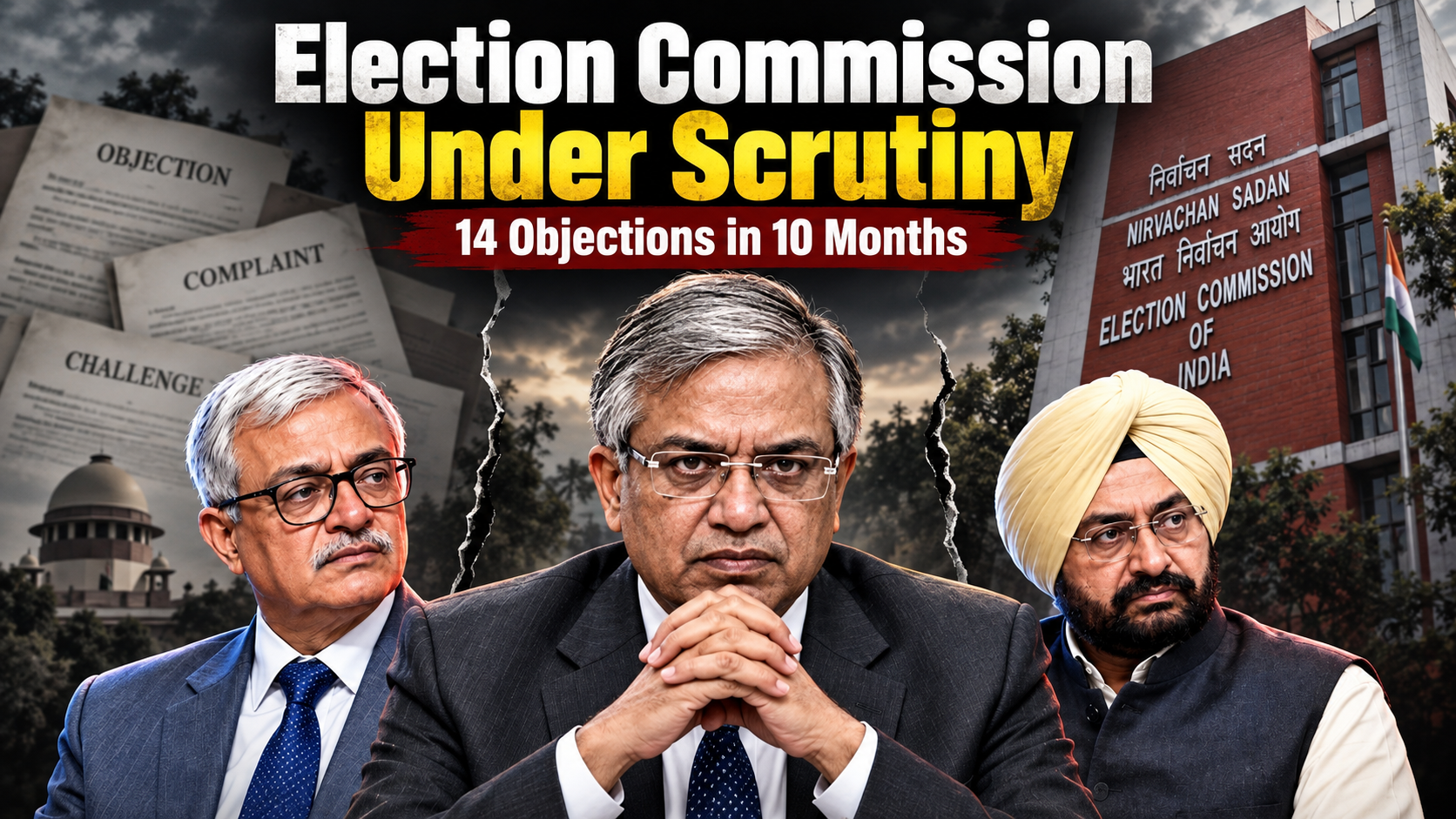
For most citizens, the Election Commission of India appears as a single institution. Orders are issued in the name of the Commission, election schedules are announced by the Commission, electoral rolls are revised under its authority, and its decisions carry enormous constitutional weight. But the Election Commission is not a one-person office. It is a multi-member constitutional body, and the law governing its functioning specifically provides for collective decision-making.
That is why an investigation published by The Indian Express on
September 23, 2026, has raised an important institutional question. According
to the newspaper, Election Commissioners Sukhbir Singh Sandhu and Vivek Joshi
recorded objections at least 14 times over a period of 10 months to
decisions, orders or administrative steps that they said had been taken without
their knowledge or approval. Four of those objections, according to the
investigation, came on a single day.¹
The issues were not peripheral matters. They involved registration of
new voters, deletion and restoration of names, changes connected with Form 6,
appeals concerning entries in electoral rolls, control over voter-roll software
and the powers of statutory electoral officers in the States. The newspaper
also reported that both Commissioners separately approached Cabinet Secretary T
V Somanathan when an internal work-allocation decision affected oversight of
the Election Commission’s information-technology systems.¹ ³
The Election Commission has rejected the suggestion that these internal
objections demonstrate that its final decisions were not collective. In its
response after publication of the investigation, the Commission said that
individual observations, operational queries and suggestions during
deliberations are a normal part of institutional functioning. It maintained
that all final decisions taken by the full Commission during the period,
including those relating to the Special Intensive Revision, were unanimous.⁷
This creates an important distinction. The question is not simply
whether Sandhu and Joshi ever disagreed with Chief Election Commissioner
Gyanesh Kumar. Disagreement inside a constitutional body is neither unusual nor
automatically problematic. The more consequential question raised by the
documents reported by The Indian Express is whether particular
instructions, communications and operational changes were implemented in the
Commission’s name before the three-member Commission had collectively approved
them.
The 14 Objections Were Connected to the Heart of the Electoral-Roll System
The Special Intensive Revision, or SIR, began in Bihar in June 2025 and
was subsequently expanded across much of the country. The Indian Express
reported that more than 13 crore names were left out of draft electoral
rolls across 30 States and Union Territories during the exercise.¹
That figure requires an important qualification. A name being absent
from a draft roll is not automatically the same as a final and permanent
deletion. Election Commission procedures provide for publication of draft rolls
followed by a claims-and-objections period, hearings and eventual publication
of final electoral rolls. Official ECI instructions expressly provide for such
a process.⁵
Even with that distinction, the scale of the revision makes the
reported internal objections significant. They touched upon the mechanisms
through which a citizen enters the electoral roll, remains on it, challenges a
deletion, or is restored after being removed.
The controversy can broadly be understood through four areas: Form 6
and registration of new voters, centralisation of electoral-roll software,
deletion and restoration of voters, and the procedure through which decisions
were issued in the name of the Election Commission itself.
Form 6: Can a Statutory Voter-Registration Form Be Changed Administratively?
One of the clearest disagreements concerned Form 6, the
statutory form used by eligible citizens seeking registration as voters.
According to The Indian Express, the online Form 6 process began
asking applicants whether they, their parents or their grandparents appeared in
the electoral roll prepared during the previous intensive revision. Although
the additional section was not itself marked mandatory, applicants reportedly
could not complete the online submission without answering it.²
Vivek Joshi’s Objection
Election Commissioner Vivek Joshi had reportedly recorded an objection
on May 16. His position, according to the report, was that Form 6 and Form 8
are forms prescribed through the Registration of Electors Rules, 1960, and
therefore could not simply be modified through an administrative SIR
instruction.
The report says Joshi argued that if Form 6 had to be altered, the
legally appropriate method would be to amend the relevant Rules through the
competent authority. Election Commissioner Sukhbir Singh Sandhu reportedly
concurred with this position on May 19.²
Sandhu Later Called the Change “Unauthorised” and “Illegal”
Despite those objections, the additional declaration appeared on the
ECINet portal.
On August 13, according to The Indian Express, Sandhu again put
his objection on record, describing the change as “unauthorised” and
“illegal” and calling for its removal so that eligible young and first-time
voters would not face unnecessary difficulty.¹ ²
The significance of the dispute goes beyond the wording of one form.
Electoral-registration forms form part of a statutory framework. If an
administrative portal effectively adds a new condition or declaration to a
statutory form, the legal question becomes one of authority as well as
convenience.
The Election Commission’s response is that individual observations made
while policy or implementation is being developed do not themselves constitute
final Commission decisions. The unresolved issue, therefore, is whether the
disputed Form 6 requirement represented an interim implementation step
subsequently approved by the Commission, or whether an operational requirement
was imposed despite the objections recorded by two Commissioners.⁷
The Deeper Issue: Who Actually Controls the Electoral-Roll Database?
A second and potentially more consequential disagreement involved the
Commission’s digital infrastructure.
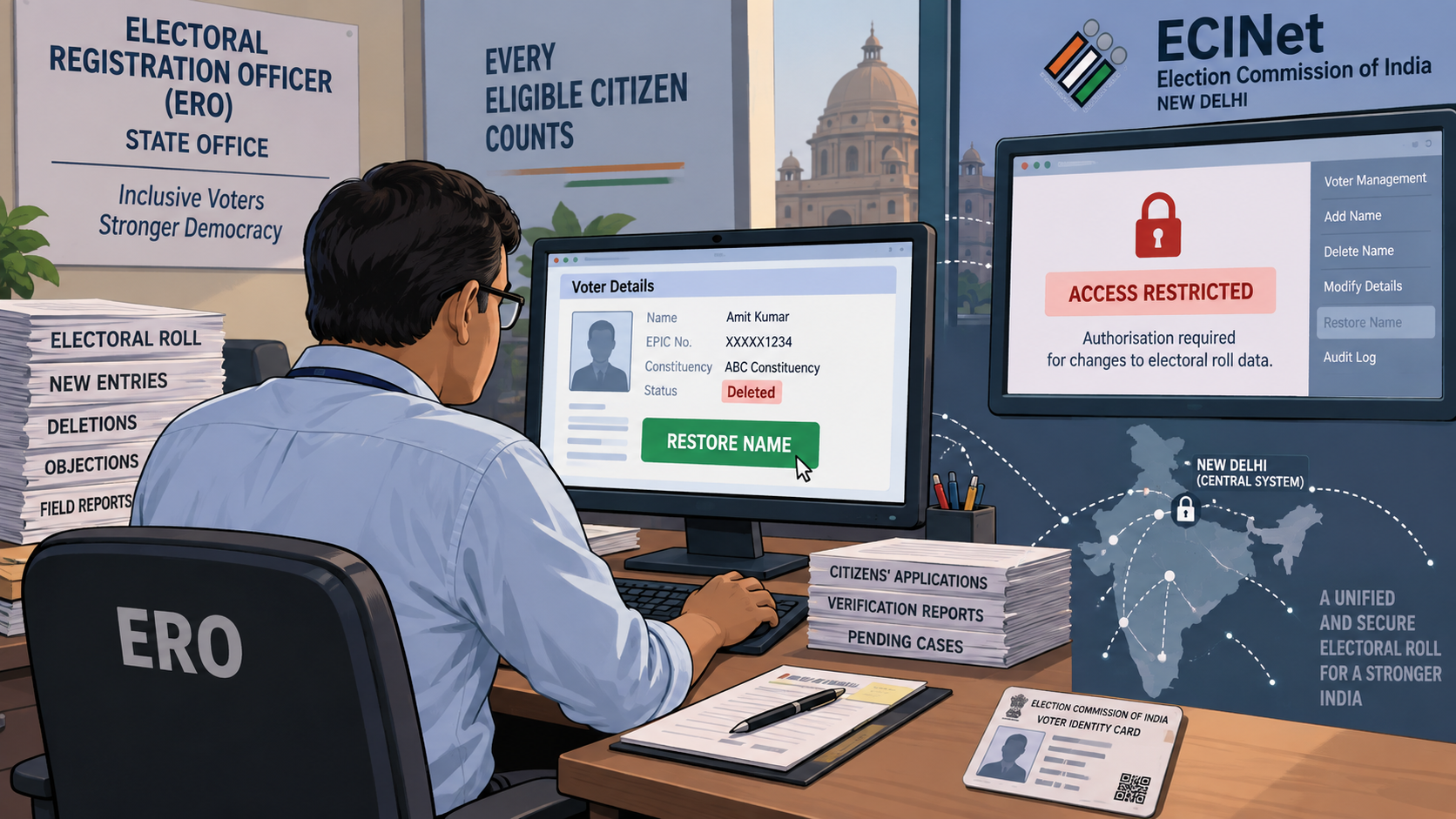
Electoral rolls are administered through Electoral Registration
Officers, or EROs, appointed for constituencies. These officers deal with
claims, objections, additions and deletions under the statutory
electoral-registration framework.
As electoral-roll administration has become increasingly digital,
systems such as ERONet and subsequently ECINet have become central to how these
decisions are recorded and implemented.
ECINet was launched as an integrated election platform bringing
together dozens of previously separate election-related applications and
services.³
Joshi Warned About “Gradual Centralisation”
According to the Indian Express investigation, Joshi raised concerns in
May about what he described as the “gradual centralisation” of the
electoral-roll database.
He proposed an audit to verify that only the statutory authorities
legally empowered to alter voter records possessed the credentials necessary to
make such changes. He also reportedly suggested independent technical scrutiny
involving experts from institutions such as the IITs.¹ ³
Sandhu Questioned Restrictions on State Officials
Sandhu subsequently recorded that officials at the State level had
complained that they did not have proper and complete access to ERONet.
He questioned whether officials in the Election Commission’s IT
division could restrict the operational access of statutory authorities who
were legally responsible for maintenance of electoral rolls.¹
This is where what appears to be a technical disagreement becomes an
institutional question.
If the law empowers an ERO to determine whether a citizen should be
included in an electoral roll, but the digital system does not permit the
officer to implement that decision, then practical control may no longer rest
entirely with the statutory officer.
That does not automatically demonstrate manipulation. Restrictions on
database access can serve legitimate purposes including cybersecurity,
prevention of unauthorised alteration, auditability and protection of voter
data. The Election Commission has itself defended ECINet's security
architecture on those grounds.⁷
The question raised by the Commissioners' reported objections is
narrower: whether technical controls altered the practical distribution of
authority prescribed by electoral law.
Goa: When EROs Reportedly Could Not Restore 97 Eligible Voters
The Goa episode reported by The Indian Express illustrates why
control of electoral software matters.
According to the investigation, EROs in Goa examined cases involving
voters flagged because of what were described as “logical discrepancies”. After
examining the documents submitted by those voters, the EROs reportedly found 97
persons eligible for inclusion in the final electoral roll.¹
However, the software reportedly did not provide the officers with the
necessary facility to reverse the earlier deletion.
Between February 11 and February 17, according to the report, the
office of Goa’s Chief Electoral Officer repeatedly requested that the required
rollback facility be enabled. The newspaper reported that this was not done
before publication of the final roll, leaving the 97 voters outside the final
electoral roll at that stage.¹
Ninety-seven voters are a very small number in an electorate
approaching a billion voters. Institutionally, however, the example matters
because it illustrates the distinction between legal authority and
technological capability.
If a statutory officer concludes that a citizen satisfies the
requirements for inclusion but cannot enter that conclusion into the electoral
database, the software itself becomes part of the effective decision-making
process.
West Bengal: Who Authorised Appeals Against Inclusion of Voters?
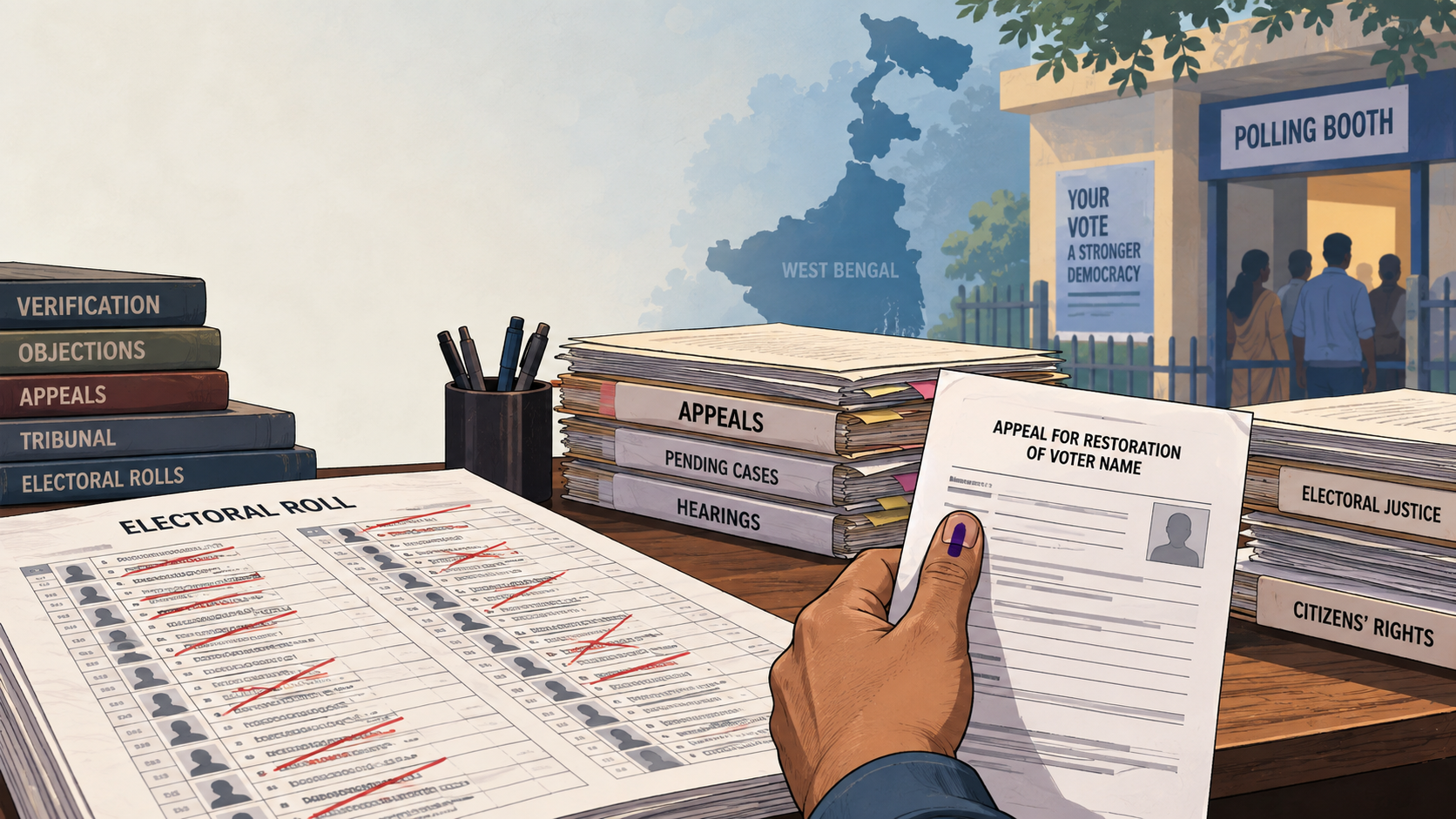
The West Bengal phase of the SIR became one of the most contested
portions of the nationwide exercise, eventually involving extensive litigation
and judicial supervision.
According to figures reported before the Supreme Court, more than 38
lakh appeals were connected with the West Bengal SIR process. Of these,
around 22.21 lakh were filed by deleted voters seeking restoration,
while another 16.10 lakh challenged the inclusion of voters.¹
It was the second category that reportedly prompted Sandhu to seek
answers internally.
Sandhu Asked Who Had Authorised the Appeals
According to the Indian Express investigation, Sandhu asked officials
who had authorised appeals filed in the name of the Election Commission against
voters whom judicial officers had allowed to remain on the electoral roll.
He also asked who had actually filed those appeals.
The report states that Sandhu recorded that neither he, Vivek Joshi,
nor the then Chief Electoral Officer of West Bengal had been informed about the
basis or procedure through which the appeals were initiated.¹
This does not, by itself, establish that the appeals were legally
improper. Electoral law provides mechanisms through which inclusion or deletion
decisions can be challenged.
The institutional question is different: if an appeal is being
pursued in the name of the Election Commission of India, what level of approval
is required before the Commission's name and authority can be used?
That question becomes particularly important when two of the three
members reportedly say they were unaware of the process.
April Notes Raised a More Fundamental Procedural Question
The investigation also reported internal correspondence that went
directly to the way decisions and communications were being issued.
Sandhu’s April 16 Communication
On April 16, Sandhu reportedly told senior officials that
communications were being issued in the name of the Election Commission without
approval of the Commission itself and that communications issued in the
Commission's name should comply with the procedure required under the 2023
Act.¹
Joshi Raised a Similar Concern Eight Days Later
Eight days later, according to the newspaper, Joshi recorded a similar
concern and said communications being disseminated in the ECI's name should
receive the requisite approval of the Commission in accordance with Article 324
and the governing law.¹
This distinction is important.
There is a substantial difference between a Commissioner saying, “I
disagree with a decision taken by the Commission,” and a Commissioner
effectively saying, “I did not know that this decision or communication was
being issued in the Commission’s name.”
The first is ordinary institutional disagreement. The second raises a
procedural question about how institutional authority is being exercised.
What the Law Says About the Three-Member Election Commission
The legal framework governing the Election Commission does not treat
the Chief Election Commissioner as someone who can simply override the other
two Election Commissioners on matters requiring a decision of the Commission.
Section 18 of the Chief Election Commissioner and Other Election
Commissioners (Appointment, Conditions of Service and Term of Office) Act, 2023
states that the Election Commission may regulate its procedure and allocation
of business by unanimous decision.
More importantly, Section 18(2) requires that Commission business
should, as far as possible, be conducted unanimously. Where the Chief Election
Commissioner and the other Election Commissioners differ, the matter is to be
decided according to the majority view.⁶
In a three-member Commission, therefore, the existence of the position
of Chief Election Commissioner does not convert the institution into a
single-member executive authority.
The number 14 is consequently less important than the character
of those objections.
A multi-member constitutional institution can contain frequent
disagreements without becoming dysfunctional. Indeed, disagreement may
demonstrate that internal scrutiny is functioning.
The significant issue is whether, after disagreement arose, the matter
was ultimately handled through the collective procedure prescribed by law.
The Cabinet Secretary Episode Raises Another Institutional Question
One of the most unusual episodes reported by The Indian Express
concerned oversight of the Commission’s information-technology division.
When an officer holding additional administrative charge reportedly
changed allocation of work in a manner that removed an existing layer of
supervision over the IT division, both Sandhu and Joshi objected.
According to the investigation, on July 29 the two Election
Commissioners separately wrote to Cabinet Secretary T V Somanathan regarding
the issue. They subsequently acted to restore the earlier arrangement until the
full Commission could deal with the matter.³
The reported episode matters for two reasons.
First, the differences were not limited to a single voter-registration
form or one State. They extended to the institutional structure supervising the
digital systems through which electoral rolls are administered.
Second, two Election Commissioners separately approaching the Cabinet
Secretary about an internal Election Commission administrative issue suggests
that, at least from their perspective, the matter had reached a level where
ordinary internal handling was insufficient.
The Indian Express reported that all three Commissioners
subsequently met on September 9, which the newspaper described as their
first full meeting in four months.¹
The Election Commission’s Response: Internal Views Are Not Final Decisions
Any assessment of the controversy must also include the Election
Commission’s response.
Following publication of the investigation, the ECI said that differing
observations, operational queries and suggestions from members of a
multi-member constitutional body form part of normal institutional
deliberation.
The Commission's position is that focusing on selected internal notes
over a ten-month period presents only part of the institutional record.
Most importantly, the Election Commission has stated that all final
decisions of the full Commission during the period, including decisions
connected with the SIR, were unanimous.⁷
That defence introduces an important distinction between three stages
of institutional functioning: an individual Commissioner’s observation, an
administrative action or draft proposal, and a formally approved decision of
the Election Commission.
Those things are not necessarily identical.
If Sandhu or Joshi objected to a proposal and that proposal was
subsequently modified before receiving unanimous approval, the objection would
demonstrate internal scrutiny rather than institutional breakdown.
If, however, a direction or administrative action was implemented in
the name of the Election Commission before receiving the approval required
under the Commission’s collective decision-making process, then a different
institutional question arises.
The Indian Express investigation reports examples that it argues fall
into the latter category. The Election Commission emphasises that its eventual
decisions were unanimous.
What the Investigation Establishes, and What It Does Not
The reporting establishes that Sandhu and Joshi repeatedly recorded
concerns relating to electoral-roll administration, Form 6, database access,
voter-restoration issues, appeals and Commission procedure.
It also establishes, according to the documents reviewed by The
Indian Express, that there were occasions when the two Commissioners
believed actions had occurred without their knowledge or despite concerns they
had placed on record.¹
The Election Commission has not argued that Commissioners can never
express differing views. Its response instead emphasises that such views form
part of the deliberative process and that the eventual decisions of the
Commission were unanimous.⁷
What the investigation does not independently establish is that
a political party directed the disputed actions, that every voter excluded
during the SIR was wrongly excluded, or that the reported internal
disagreements automatically invalidate electoral rolls or election results.
Those conclusions would require separate evidence and, where legal
validity is challenged, findings by the appropriate courts.
The attached narration presents the issue more directly as one
requiring an explanation from Chief Election Commissioner Gyanesh Kumar. The
documents reported by The Indian Express certainly make the CEC's role
relevant because the objections were reportedly copied to him and related to
actions undertaken within the Commission he headed. But institutional
responsibility and a proven finding of individual wrongdoing are not the same
thing.
That distinction is important in examining a constitutional
institution.
The Real Question Is Not Whether Commissioners Disagreed
Much of the political discussion following the report has
understandably concentrated on the existence of disagreement within the
Election Commission.
But disagreement itself is not the core issue.
Three Commissioners need not think alike. In fact, the 2023 law
expressly anticipates disagreement by providing that matters on which the
Commissioners differ are to be determined by majority opinion.⁶
The more important question is whether the processes followed after
disagreement emerged complied with that framework.
If two Commissioners objected to a proposed action, was the issue
placed before the three-member Commission?
If the three members disagreed, was a formal decision taken?
If a decision was unanimous, is there an institutional record showing
how the objections were resolved?
If an action was already implemented before that process occurred,
under whose authority was it implemented?
These are procedural questions rather than partisan ones, and they are
capable of documentary answers.
Transparency Can Resolve Much of the Controversy
The controversy therefore need not remain a contest between political
accusations on one side and institutional assurances on the other.
The Election Commission could clarify which of the 14 reported
objections related only to preliminary proposals and which involved actions
that had already been implemented.
It could explain whether those matters were subsequently placed before
all three Commissioners, whether any of the disputed steps were modified or
withdrawn, and how unanimous approval was ultimately reached where the
Commission says such approval existed.
Similarly, greater clarity could be provided about whether the Form 6
changes received the necessary statutory authority, what level of access EROs
and State election authorities possess within ECINet, who authorised the
disputed West Bengal appeals, and what technological safeguards ensure that
software restrictions cannot prevent statutory officers from implementing
legally valid decisions.
The Election Commission has defended ECINet's security architecture by
saying that controls, audits and access restrictions are necessary to protect
electoral data against unauthorised manipulation.⁷
That is a legitimate institutional concern.
But security and statutory authority are separate questions. A secure
database must still allow officials who possess lawful decision-making powers
to exercise those powers through the system.
Electoral Credibility Depends on Process as Much as Outcome
The Election Commission occupies an unusual position in Indian
democracy.
Political parties contest elections. Governments change. Candidates win
and lose. Election strategies and alliances change continuously. The
institution administering those elections, however, must retain credibility
irrespective of which party is in power or opposition.
That credibility depends not only on the outcome of an election but
also on whether the processes leading to that outcome are demonstrably
consistent with law.
This is why the reported objections deserve examination without
automatically converting them either into proof of wrongdoing or dismissing
them as routine bureaucratic correspondence.
The documents reported by The Indian Express concern matters at
the centre of electoral administration: who becomes a voter, who remains a
voter, who can restore a voter, who controls the database containing the
electoral roll, and who has the authority to issue instructions in the name of
the Election Commission of India.
These questions deserve documentary answers.
Fourteen Objections Matter Because Two of Three Commissioners Raised Them
The significance of the Indian Express investigation ultimately lies
not merely in the number fourteen.
It lies in the fact that two members of a three-member
constitutional body repeatedly considered certain issues important enough to
place their objections formally on record.¹
That does not establish that those Commissioners were correct on every
point. Nor does it establish that the Chief Election Commissioner acted
unlawfully. The Election Commission has expressly stated that all of its final
decisions were unanimous.⁷
But those two facts can coexist only if the institutional process
between objection and final approval is understood.
If the objections were considered, discussed and resolved before final
decisions were taken unanimously, disclosure of that process would strengthen
the Commission's response.
If some disputed measures were implemented before collective approval
and later corrected, explaining that sequence would also clarify the record.
Either way, transparency would provide a more durable answer than
competing political claims.
For an institution entrusted with administering the democratic right to
vote, the question is not merely whether it says that it acted collectively.
The stronger institutional standard is whether the sequence of proposal,
objection, deliberation, authority and final decision can itself withstand
public scrutiny.
-----------------------------------------------------------------------------------------------------
References
- Ritika Chopra, The
Indian Express, “14 times in 10 months, two Election Commissioners
objected on record to poll panel steps”, September 23, 2026. Read
the Indian Express investigation
- Ritika Chopra, The
Indian Express, “‘Illegal, unauthorised’: Election Commissioners objected
to Form 6 change”, September 23, 2026. Read
the Form 6 investigation
- Ritika Chopra and
Damini Nath, The Indian Express, “Election Commissioners knocked on
Cabinet Secretary’s door over voter software integrity”, September 23,
2026. Read
the ECINet investigation
- The Indian Express,
reporting on West Bengal SIR appeals before the Supreme Court, September
2026.
- Election Commission
of India, official Special Intensive Revision instructions and schedules
concerning publication of draft rolls, claims and objections, hearings and
final publication.
- The Chief Election
Commissioner and Other Election Commissioners (Appointment, Conditions of
Service and Term of Office) Act, 2023, Section 18, concerning transaction
and disposal of Election Commission business.
- Election Commission of India response following the September 23, 2026 reports, stating that internal observations are part of institutional deliberation and that final Commission decisions were unanimous.
Ask Arka about what you just read
Ask for a summary, clarification, the evidence behind an argument, or more writing by Anindya on the same subject.



Discussion