In this article
- When a Prime Minister Asked for Votes in the Name of Soldiers
- Ashok Lavasa and the Price of Dissent
- The Supreme Court Tried to Protect the Appointment Process
- A Controversial Passage Through Parliament
- Section 16 and the Question of Accountability
- The Sudden Resignation Before the 2024 Election
- The 2024 Election and the Growing Transparency Problem
- Campaign Speeches and Selective Enforcement
- The Electoral Roll: Where the Most Serious Questions Begin
- Why the Assembly Election Results Raised More Questions
- Rajiv Kumar's Departure and Gyanesh Kumar's Rise
- Who Is Gyanesh Kumar?
- The Allegation Made by a Former Senior Bureaucrat
- The Vote Theft Allegations and the Demand for Evidence
- The CCTV Controversy
- Bihar, Welfare Payments and the Question of Consistency
- Special Intensive Revision and the Fear of Disenfranchisement
- The Indian Express Investigation: A Crisis Inside the Commission
- 1. The Controversial Changes to Form 6
- 2. The West Bengal Appeals Controversy
- 3. ECI Net and the Centralisation of Electoral-Roll Control
- The Reported Removal of an Administrative Link
- Why Electoral Transparency Is Becoming More Difficult
- The Change to Rule 93
- The Retention of CCTV Footage
- The Revolving Door Between Election Administration and Government
- The Real Question Is Bigger Than Gyanesh Kumar
- A Democracy Cannot Survive on Blind Trust
- Who Will Protect the Voter From the Referee?
- Watch this Video to understand the full Fraud
- References and Attribution
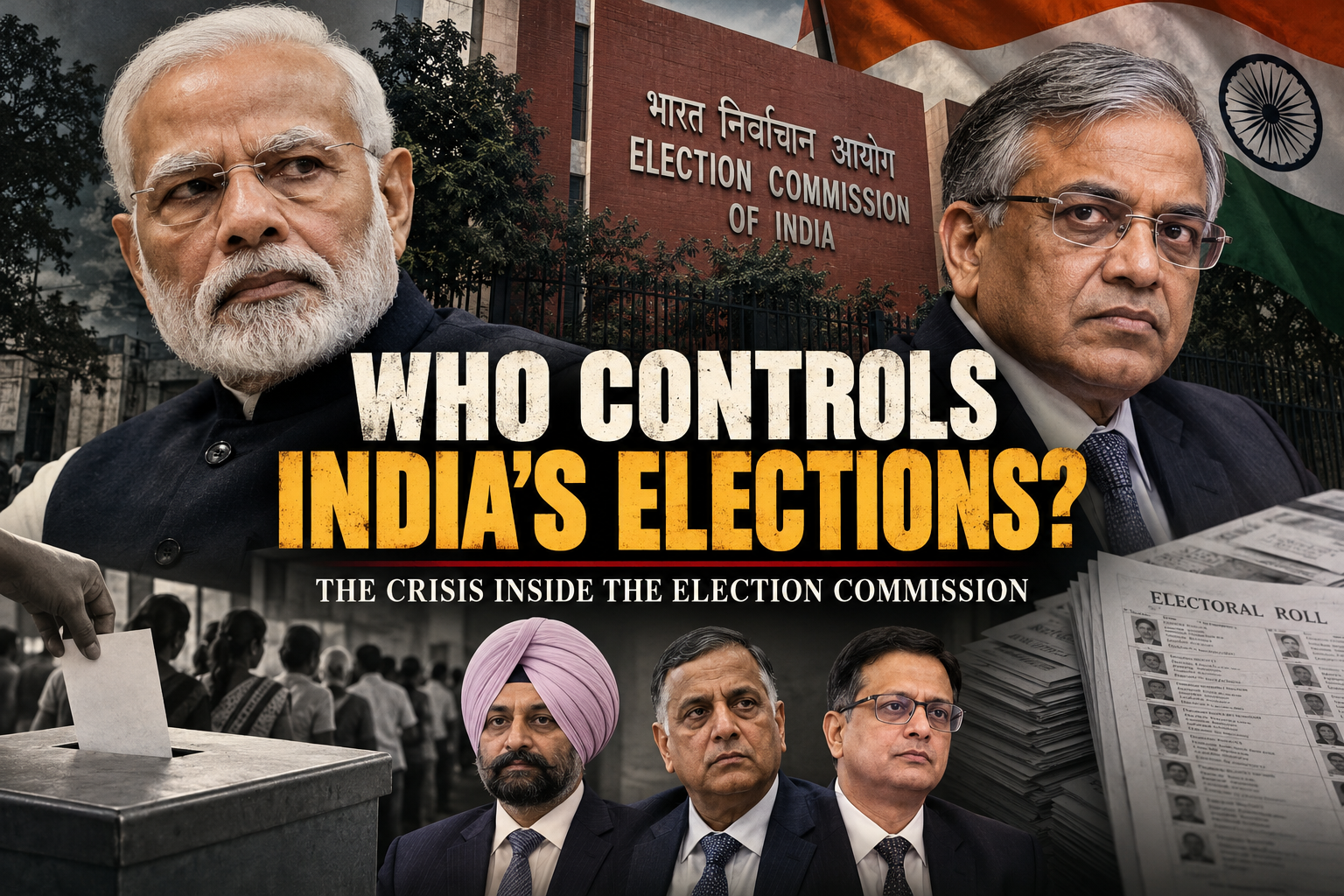
India does not become an electoral democracy merely because elections are held every five years. Elections must also be free, fair and credible. Every eligible citizen must be able to vote. Every vote must be counted honestly. And the institution responsible for conducting elections must be independent of the political party seeking power.
These are not extraordinary demands. They
are the minimum requirements of democracy.
Yet, over the past several years, a
disturbing series of developments has raised serious questions about the
independence of the Election Commission of India. The questions concern the
appointment of election commissioners, the treatment of dissenting officials,
the handling of electoral rolls, access to polling records and the growing
concentration of decision-making power.
At the centre of this controversy stand
Prime Minister Narendra Modi and Chief Election Commissioner Gyanesh Kumar. But
the deeper problem developed over several years, through political decisions,
legislative changes, administrative practices and a gradual erosion of
institutional safeguards.
To understand what is happening today, we
need to return to April 2019.
When a Prime Minister Asked for Votes in the Name of Soldiers
On 9 April 2019, Narendra Modi addressed
an election rally in Latur, Maharashtra. Speaking to first-time voters, he
asked whether they could dedicate their first vote to the soldiers killed in
the Pulwama terrorist attack.
The Election Commission's guidelines
prohibited political parties and candidates from using the armed forces for
electoral propaganda. The local election authorities reportedly found that the
speech violated the guidelines. Yet the Election Commission ultimately gave
Modi a clean chit.
At that time, the Commission had three
members. Two did not find the speech to be a violation. The third, Election
Commissioner Ashok Lavasa, disagreed. Lavasa believed the prohibition on using
the armed forces for political campaigning should apply regardless of who was
making the speech.
There is nothing inherently improper about
a three-member commission deciding matters by majority. The real test is
whether dissent is respected and whether officials can disagree without fearing
consequences.
Ashok Lavasa and the Price of Dissent
Following the 2019 general election,
income tax authorities initiated proceedings involving members of Ashok
Lavasa's family, including his wife, sister and son. Reports described tax
notices and questioning concerning alleged financial irregularities.
The government could argue that tax
authorities were performing their statutory duties. An investigation cannot
automatically be treated as political persecution merely because it involves
the family of a public official. But the timing was troubling.
Lavasa had emerged as the commissioner who
disagreed with decisions clearing the Prime Minister of alleged electoral
violations. Soon afterwards, his family faced extensive scrutiny. The
circumstances created a reasonable concern about whether an independent
constitutional official was being subjected to pressure.
Lavasa eventually left the Election
Commission in August 2020 to join the Asian Development Bank, before he could
become Chief Election Commissioner under the expected seniority progression.
His departure did not prove that the government had forced him out.
Nevertheless, it raised a larger institutional question: what message does it
send when an election commissioner dissents and subsequently sees his family
investigated?
Independence can weaken when officials
begin to believe that disagreement carries personal consequences.
The Supreme Court Tried to Protect the Appointment Process
For decades, the appointment of India's
Chief Election Commissioner and other election commissioners remained largely
within the control of the Union executive. The government that contests
elections also played the decisive role in selecting the people responsible for
supervising those elections.
In 2015, Anoop Baranwal filed a public
interest litigation before the Supreme Court, questioning this system and
seeking an independent appointment mechanism. The matter eventually reached a
five-judge Constitution Bench.
During hearings in November 2022, the
Supreme Court examined whether the existing appointment process provided
sufficient protection for the Election Commission's independence. While
proceedings were underway, the government appointed Arun Goel as an election
commissioner.
Goel took voluntary retirement from the
Indian Administrative Service on 18 November 2022. His retirement was accepted
with remarkable speed, and he was appointed election commissioner the following
day. The Supreme Court examined the files and questioned how a vacancy unfilled
for months could suddenly be filled so quickly.
The Court did not invalidate Goel's
appointment. But the episode illustrated how much discretion the executive
possessed.
On 2 March 2023, the Constitution Bench
delivered a unanimous judgment. Until Parliament enacted a law, election
commissioners would be selected on the advice of a committee consisting of the
Prime Minister, the Leader of the Opposition in the Lok Sabha, or the leader of
the largest opposition party, and the Chief Justice of India.
For the first time, the appointment
process would have an institutional counterweight outside the political
executive. It was an important safeguard. Unfortunately, it did not last.
How Parliament Changed the Supreme Court's Formula
The Supreme Court had expressly left
Parliament free to enact legislation governing appointments. The Modi
government used that opportunity in 2023.
The Chief Election Commissioner and Other
Election Commissioners (Appointment, Conditions of Service and Term of Office)
Act, 2023 replaced the Court's interim selection arrangement. Under the new
law, the selection committee consists of the Prime Minister, the Leader of the
Opposition and a Union Cabinet Minister nominated by the Prime Minister. The
Chief Justice of India was removed.
Two of the three members therefore belong
to the government. Even if the opposition member strongly objects, the
government's representatives can approve an appointment by majority. The
selection process retains decisive executive control.
The Election Commission is supposed to
supervise elections involving the government of the day. Yet the government
enjoys a built-in majority in selecting the officials who exercise that
supervisory authority. A democracy should not depend entirely on the goodwill
of those holding power.
A Controversial Passage Through Parliament
The legislation was passed in December
2023 amid strong opposition. Its passage coincided with an extraordinary period
of parliamentary suspensions following the security breach of 13 December, when
intruders entered the Lok Sabha chamber and released coloured smoke.
Opposition MPs demanded answers about the
security failure. Large numbers were subsequently suspended. The election
commissioners' legislation was passed while many opposition members were
absent.
Parliament had the constitutional
authority to legislate. But a law governing the independence of the electoral
referee deserved extensive debate, consultation and an effort to secure broad
political confidence. The issue was whether the resulting law strengthened the
independence of the Election Commission. There are compelling reasons to
believe that it did not.
Section 16 and the Question of Accountability
Section 16 of the 2023 law provides that
courts shall not entertain or continue civil or criminal proceedings against a
person who is or was the Chief Election Commissioner or an Election
Commissioner for acts, things or words committed, done or spoken in the course
of acting or purporting to act in the discharge of official duties.
Constitutional officials need protection
against frivolous litigation. But protection from harassment must not become
protection from accountability.
The wording is broad, and its precise
scope and constitutional limits remain important legal questions. It should not
be interpreted casually as permission to commit fraud, nor does it establish
that every official act is beyond judicial scrutiny.
Nevertheless, when broad statutory
immunity is combined with an appointment process dominated by the executive,
the result deserves serious public examination. Who appoints the commissioners?
Who holds them accountable? What remedies remain when their actions are
challenged?
The Sudden Resignation Before the 2024 Election
In February 2024, Election Commissioner
Anup Chandra Pandey retired. Then, on 9 March 2024, Arun Goel unexpectedly
resigned, shortly before the announcement of the Lok Sabha election schedule.
Goel had been participating in election
preparations and had considerable time remaining in his tenure. His departure
was surprising, and the publicly stated reasons did not fully resolve
speculation.
With two vacancies in the three-member
Commission, the government appointed Gyanesh Kumar and Sukhbir Singh Sandhu in
March 2024 under the 2023 law. Rajiv Kumar remained Chief Election
Commissioner.
The sequence was lawful under the enacted
legislation. Whether it inspired confidence in the Commission's independence is
an entirely different question.
The 2024 Election and the Growing Transparency Problem
During the 2024 Lok Sabha election, the
Election Commission faced criticism over delays in publishing detailed turnout
information and the public availability of polling-station records.
One controversy concerned Form 17C, which
records the account of votes polled at a polling station and is supplied to
polling agents under election rules. Critics sought wider public access in a
consolidated format to permit independent scrutiny of turnout figures.
Form 17C was not abolished or withheld
from all political representatives. But the controversy exposed disagreement
about how much electoral information should be available for independent
verification. Greater transparency would have helped address suspicion.
Instead, the Commission's responses often appeared defensive.
Campaign Speeches and Selective Enforcement
Human Rights Watch reported that Modi had
made anti-Muslim remarks in at least 110 of 173 campaign speeches it examined.
One widely criticised speech in Rajasthan suggested that a Congress government
would redistribute people's wealth, including women's gold and mangalsutras, to
Muslims.
The question was not whether the Prime
Minister could criticise the opposition. He could. The question was whether a
sitting Prime Minister should be held to the same electoral standards as every
other candidate. An impartial regulator must apply rules consistently.
The Electoral Roll: Where the Most Serious Questions Begin
A citizen whose name is missing from the
electoral roll may be unable to vote, regardless of political preference. Voter
registration, deletion and correction are therefore among the most sensitive
responsibilities of election administration.
Investigations by independent news
organisations, including Newslaundry, raised concerns about voter deletions in
constituencies such as Farrukhabad and Meerut in Uttar Pradesh. Reporting
examined whether deletions disproportionately affected areas with significant
opposition support, including Muslim, Dalit and Yadav populations. It also
raised questions about allegedly irregular additions.
These findings deserve independent
investigation. They do not, by themselves, establish that election results were
fraudulent or that every reported deletion was unlawful. That would require
examination of records, reasons for deletion, procedures and actual effects on
voting.
If names are being deleted incorrectly,
citizens deserve remedies. If deletions concentrate in particular communities
or opposition strongholds, the Commission must explain why. If there is
evidence of deliberate manipulation, those responsible must face legal
consequences.
Why the Assembly Election Results Raised More Questions
The BJP won 240 seats in the 2024 Lok
Sabha election, falling short of an independent majority, but formed a
government with its NDA partners. In the following months, the BJP and its
allies secured important assembly victories in Haryana and Maharashtra, and the
BJP returned to power in Delhi in February 2025.
Opposition parties questioned the contrast
between the national and state outcomes. Maharashtra became a focus because of
voter-registration changes and the scale of the ruling alliance's victory.
Electoral swings between national and
state elections are not inherently evidence of fraud. Voters can make different
choices, alliances can change and turnout can vary. The legitimate question is
whether electoral data and voter-roll changes can be independently verified.
The Commission should answer with clear, accessible and auditable records.
Rajiv Kumar's Departure and Gyanesh Kumar's Rise
Rajiv Kumar retired as Chief Election
Commissioner in February 2025. Gyanesh Kumar became India's 26th Chief Election
Commissioner on 19 February 2025.
Later, Rajiv Kumar was appointed
non-executive part-time chairman of HDFC Bank, subject to regulatory approval.
That attracted criticism because of controversies surrounding elections
conducted during his tenure. But a private-sector appointment after retirement
is not, in itself, evidence of electoral wrongdoing.
The appropriate questions concern
conflicts of interest, regulatory compliance and whether official decisions
were improperly influenced. Public trust depends on formal legality and visible
independence.
Who Is Gyanesh Kumar?
Gyanesh Kumar is a 1988-batch IAS officer
of the Kerala cadre. He held important positions in the Union government,
including assignments in the Ministry of Home Affairs and the Ministry of
Cooperation.
During the process surrounding the removal
of Jammu and Kashmir's special constitutional status in 2019, he held
responsibilities connected with Jammu and Kashmir affairs. He also played an
administrative role in establishing the Shri Ram Janmabhoomi Teerth Kshetra
Trust following the Supreme Court's Ayodhya judgment.
He later served as Secretary in the
Ministry of Cooperation, headed politically by Amit Shah. He retired in January
2024 and was appointed Election Commissioner in March 2024.
These positions demonstrate extensive
administrative experience, not automatic proof of political bias. But an
election supervisor must be capable of acting against the interests of the
government under which he previously served.
The Allegation Made by a Former Senior Bureaucrat
The source transcript refers to an
allegation by former senior IAS officer Jiji Thomson, who reportedly said Kumar
had suggested that he contest the 2019 Lok Sabha election on a BJP ticket and
pursue a ministerial position.
This must remain identified as Thomson's
account unless independently corroborated. A reported private conversation is
not conclusive proof of partisan conduct in constitutional office. The
Commission's credibility must be assessed through decisions, procedures,
transparency and adherence to law.
The Vote Theft Allegations and the Demand for Evidence
On 7 August 2025, Rahul Gandhi presented
allegations of electoral-roll manipulation, including irregularities in the
Mahadevapura Assembly segment of the Bengaluru Central parliamentary
constituency. He questioned alleged duplicate voters, suspicious addresses and
other entries.
The Election Commission challenged the
allegations and demanded formal declarations or supporting evidence. Requiring
evidence before accepting an allegation of fraud is reasonable. But if credible
anomalies are presented, the Commission must investigate through a transparent
and impartial process.
The Commission should not behave like a
political opponent in a television debate. Its responsibility is to establish
facts, explain findings and correct genuine irregularities.
The CCTV Controversy
Questions were also raised about access to
polling-station CCTV footage. Gyanesh Kumar defended restrictions by referring
to voter privacy, including women's privacy.
Privacy is legitimate, but privacy and
accountability are not mutually exclusive. Restricted access, judicial
supervision and redaction can protect individuals while preserving evidence
needed for legitimate scrutiny.
If records cannot be examined when
credible allegations arise, citizens are asked to trust an institution without
adequate means of checking its conduct. Trust is important. Verification is
equally important.
Bihar, Welfare Payments and the Question of Consistency
The transcript raises a controversy about
welfare payments around the Bihar Assembly election. The Bihar government's
Mukhyamantri Mahila Rojgar Yojana involved an initial assistance amount of
₹10,000 for eligible women. Opposition parties alleged that the timing of
payments around the election was intended to influence voters.
The account compares this with the
Election Commission's November 2023 restriction on disbursements under
Telangana's Rythu Bandhu scheme during the election period.
Whether a payment violates election rules
depends on the scheme's status, timing, applicable restrictions and any
permission granted. A welfare payment during an election is not automatically
illegal. The Commission must apply consistent principles to all governments and
explain differences in treatment.
Special Intensive Revision and the Fear of Disenfranchisement
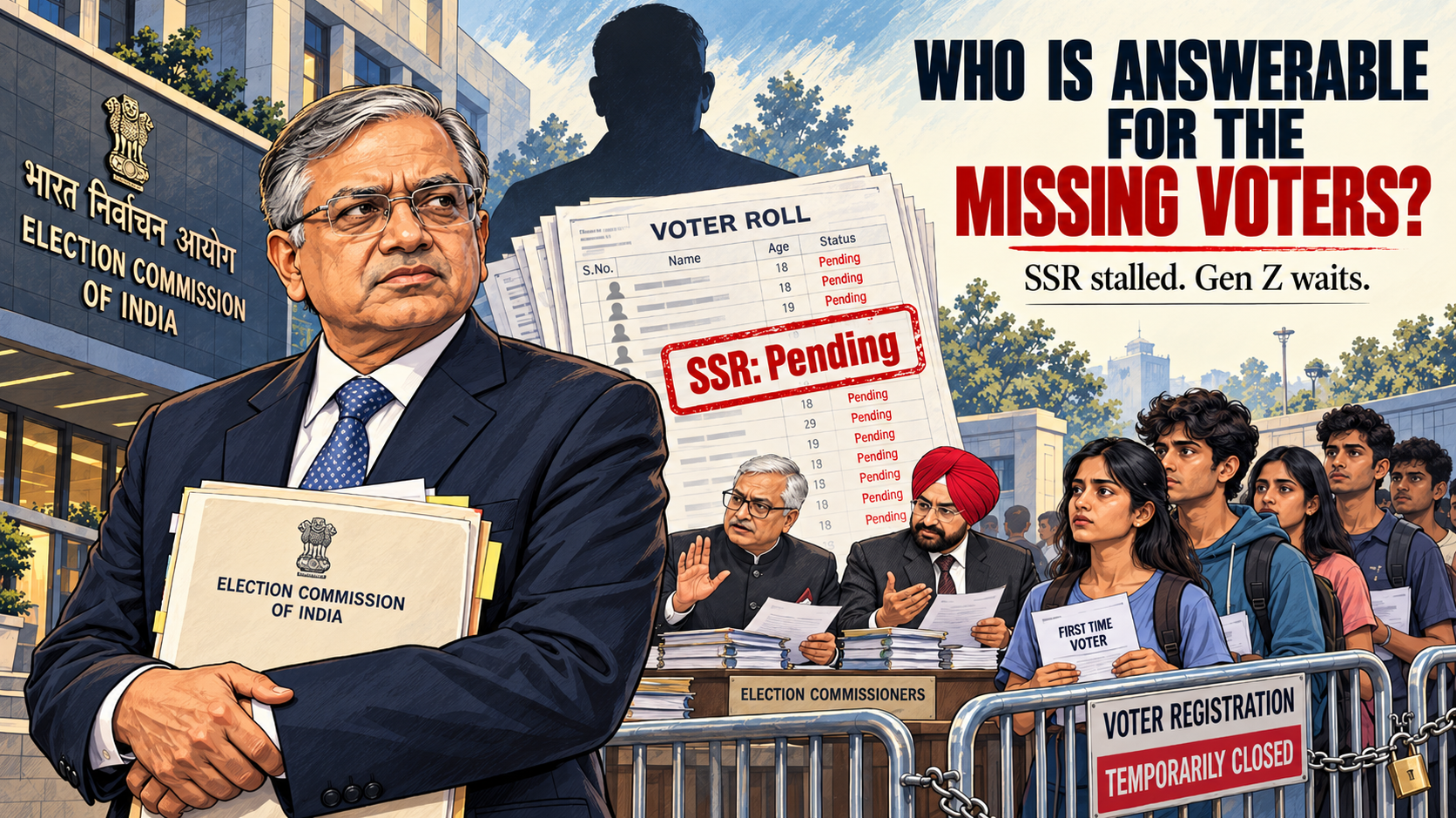
The Special Intensive Revision, or SIR, of
electoral rolls became one of the most contentious developments under Gyanesh
Kumar. The Commission says revisions are needed to remove duplicate entries,
deceased voters, ineligible registrations and inaccuracies. That objective is
legitimate.
But correction must not become a mechanism
through which genuine citizens lose voting rights. The transcript describes
concerns about deletions, documentary requirements, alleged discrepancies and
the treatment of voters in opposition-leaning regions, including Bihar's
Seemanchal and parts of West Bengal.
The issue is how revisions are carried
out, who bears the burden of proof, whether notices are properly served,
whether appeals are meaningful and whether officials follow statutory
procedures. A legitimate voter must not be treated as an intruder in their own
democracy.
The Indian Express Investigation: A Crisis Inside the Commission
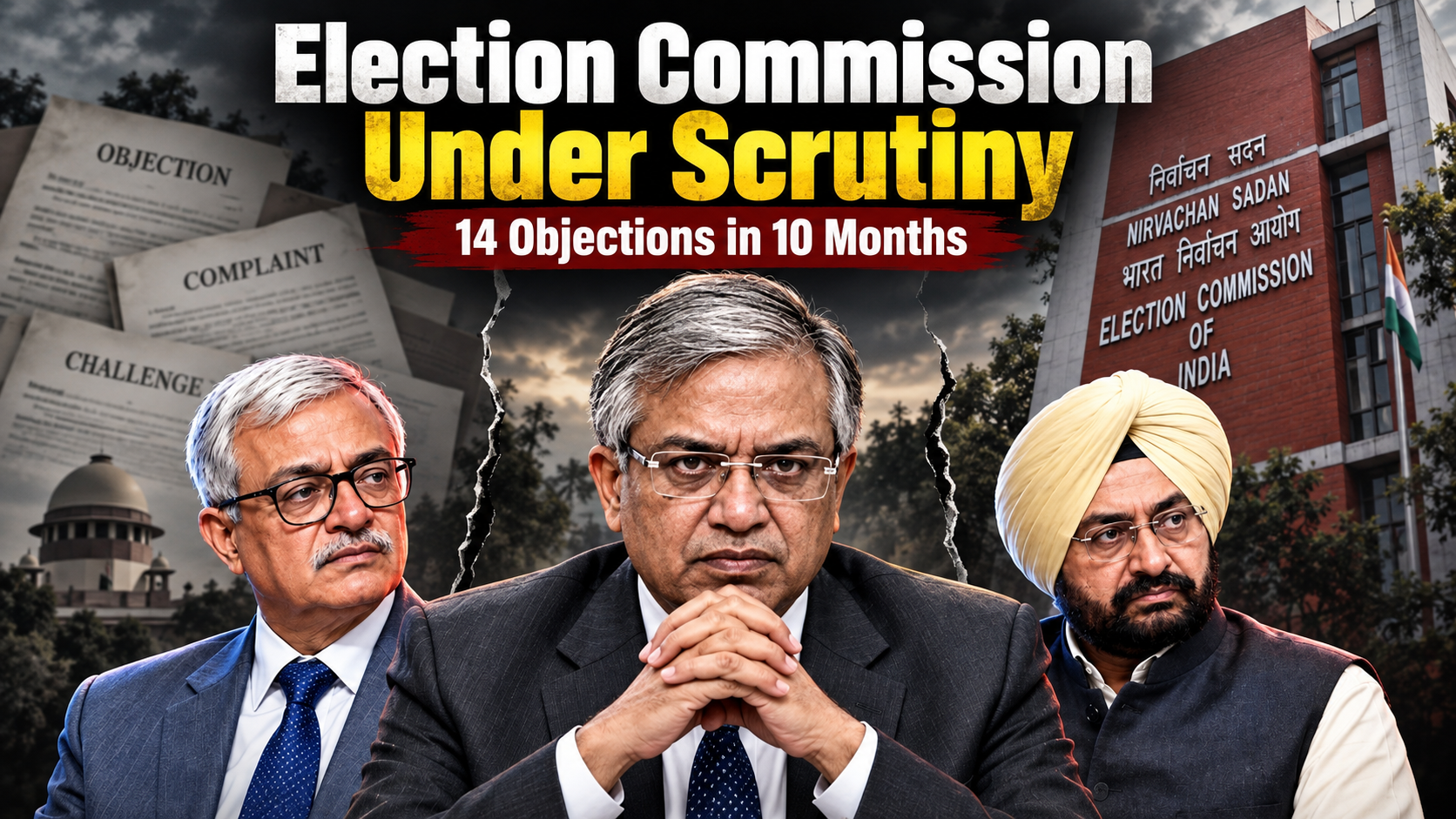
An investigation attributed to The Indian
Express journalists Ritika Chopra and Damini Nath reportedly revealed serious
disagreements within the Election Commission. According to the account,
Commissioners Sukhbir Singh Sandhu and Vivek Joshi repeatedly objected to
decisions taken or implemented without adequate consultation. The report
described at least 14 recorded objections over approximately ten months.
The Commission has disputed the
implication that its decisions lacked collective approval. That response must
be considered alongside the reporting.
Criticism from opposition parties can be
dismissed as political disagreement. But reported objections by two serving
commissioners about their own institution demand scrutiny. A multi-member
Commission is intended to prevent excessive concentration of authority.
1. The Controversial Changes to Form 6
Form 6 is used to apply for inclusion in
the electoral roll. The transcript states that a new question was added asking
whether applicants, their parents or grandparents appeared in an earlier SIR
roll.
According to the reported investigation,
the change was introduced without following the required legal process and
without approval that the two commissioners believed necessary. Election forms
are governed by prescribed rules. An unauthorised mandatory question can affect
whether eligible citizens can apply.
The Commission must explain who authorised
the change and under what legal provision. The Supreme Court subsequently
clarified that it had neither approved nor disapproved the modified Form 6.
2. The West Bengal Appeals Controversy
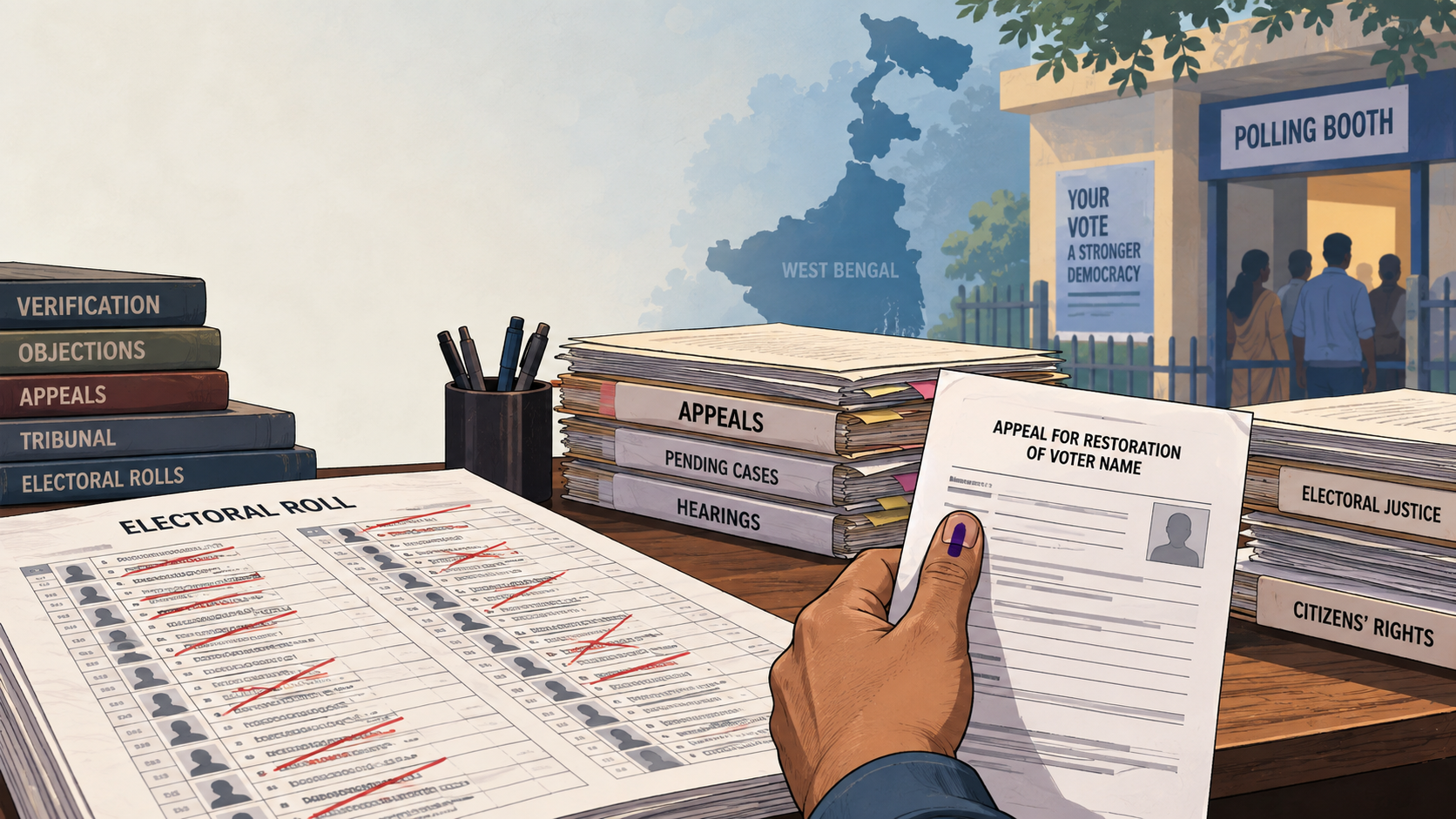
The transcript describes voters flagged
for logical discrepancies in West Bengal, followed by judicial decisions
restoring some names. It then refers to appeals challenging the restoration of
approximately 16.10 lakh voters.
According to the reported investigation,
Sandhu questioned who authorised filing those appeals on behalf of the Election
Commission and why commissioners and relevant state authorities were not
adequately informed.
Who instructed the lawyers? Who approved
the appeals? What grounds were examined? These questions concern the voting
rights of citizens whose eligibility had already been considered through a
judicial process.
3. ECI Net and the Centralisation of Electoral-Roll Control
Under electoral law, Electoral
Registration Officers, or EROs, have statutory responsibilities for maintaining
and correcting rolls. The transcript alleges that controls in ECI Net
concentrated significant authority in the Commission's central IT administration
and restricted local officers' access.
The reported concerns of Sandhu and Joshi
focused on whether software prevented authorised officials from exercising
legal powers. Software cannot override the law. A digital system should help
officials discharge statutory responsibilities, not silently transfer them
elsewhere.
If local EROs cannot perform lawful
corrections because a central system denies access, the problem is not simply
technical. It concerns legal authority and accountability.
The Reported Removal of an Administrative Link
The transcript describes a dispute
concerning Deputy Election Commissioner Sanjay Kumar, reportedly an
administrative link between the commissioners and the IT division. Changes to
his responsibilities were allegedly made without adequately informing Sandhu
and Joshi.
The commissioners reportedly objected,
including through communications to the Cabinet Secretary, and the decision was
reversed. Internal communication is not an optional courtesy in a
constitutional body. Members must be able to obtain information and exercise
oversight.
Why Electoral Transparency Is Becoming More Difficult
The transcript identifies electoral rolls
published as scanned PDF documents. These can be difficult to search, compare
and analyse. A public document that cannot meaningfully be searched is
technically available but practically difficult to scrutinise.
There are legitimate privacy questions
surrounding mass publication of voter information. But those should be
addressed with carefully designed safeguards, not unnecessary barriers to
verification.
The Change to Rule 93
In December 2024, the Union government
amended Rule 93 of the Conduct of Elections Rules, 1961, restricting categories
of election-related documents available for public inspection. The amendment
followed litigation over access to election records, including CCTV footage.
The government defended restrictions on
privacy and potential misuse grounds. Critics argued that they reduced
transparency. This was not merely an internal Commission decision: the Union
government changed the legal framework.
The Retention of CCTV Footage
The transcript refers to a 2025 policy
under which polling-station CCTV and related footage could be deleted after the
45-day election-petition period if no relevant challenge was pending.
There are reasons for retention limits,
including privacy, security and cost. But allegations may take time to
investigate. Where credible disputes exist, procedures must ensure that
relevant evidence is preserved.
The Revolving Door Between Election Administration and Government
The transcript raises concerns about
senior election officials receiving government appointments after supervising
elections. It refers to developments involving Manoj Kumar Agarwal and Dr
Subrata Gupta in West Bengal, and to an Assam official, Debasish Sharma,
reportedly entering electoral politics.
These cases require individual examination
of dates, service rules, resignations and precise responsibilities. A civil
servant accepting another assignment is not automatic proof of misconduct. Nor
does joining politics after leaving service establish earlier bias.
Nevertheless, appearances matter. Election
officials must avoid conduct that creates reasonable doubts about neutrality.
The public is entitled to ask whether safeguards against conflicts of interest
existed.
The Real Question Is Bigger Than Gyanesh Kumar
Gyanesh Kumar must answer for decisions
taken under his leadership. But the structural problem is larger.
Executive-dominated appointments were created through legislation. Changes
affecting public access to records involved government rule-making. Electoral-roll
controversies involve statutory authorities, administrative instructions and
software.
No single resignation would automatically
repair all these problems. India needs an appointment process commanding
confidence across parties, procedures for recording dissent, local officials
able to exercise legal duties, accessible and auditable records, and meaningful
accountability when election authorities fail to follow the law.
A Democracy Cannot Survive on Blind Trust
The most dangerous development is not
simply that political parties accuse the Commission of bias. The greater danger
is when ordinary citizens believe the institution responsible for protecting
their vote is unwilling to explain its own actions.
A constitutional authority should welcome
legitimate scrutiny. It should provide records, explain decisions, investigate
credible allegations and correct mistakes. The Election Commission does not
exist to protect Modi, Gandhi, the BJP, Congress or any other party. It exists
to protect the voter's right to a free and fair electoral process.
Who Will Protect the Voter From the Referee?
An election is not fair merely because
electronic voting machines function, polling takes place peacefully or a
winning party points to its mandate. Electoral integrity begins with the roll
and depends on impartial campaign enforcement, transparent administration,
preserved records and independent decisions.
Allegations must be examined rigorously.
No individual should be declared guilty merely because accusations have been
made. But refusing meaningful scrutiny is not a substitute for disproving
allegations.
Modi's government must answer for the laws
and rules it has introduced. Gyanesh Kumar must answer for the Commission's
functioning. Reported objections by fellow commissioners deserve independent
examination.
A government may win an election. But it
does not own the electoral process. The Election Commission may conduct an
election. But it does not own the voter's democratic rights.
When the referee itself becomes the subject of serious questions, the answer cannot be to silence the spectators. The answer must be to open the records, examine the decisions and restore institutional independence. The vote belongs to the citizen.
Watch this Video to understand the full Fraud
=================================
References and Attribution
The Indian Express:
The Indian Express: Election Commissioners objected to changes in Form 6.
The Indian Express: Election Commission's response to the reported objections.
Human Rights Watch:India: Hate Speech Fueled Modi's Election Campaign.
The Indian Express: Supreme Court clarifies its position on modified Form 6, October 2026.
Reuters: What is fuelling India's protests over changes to voter lists?.
Ask Arka about what you just read
Ask for a summary, clarification, the evidence behind an argument, or more writing by Anindya on the same subject.

Discussion